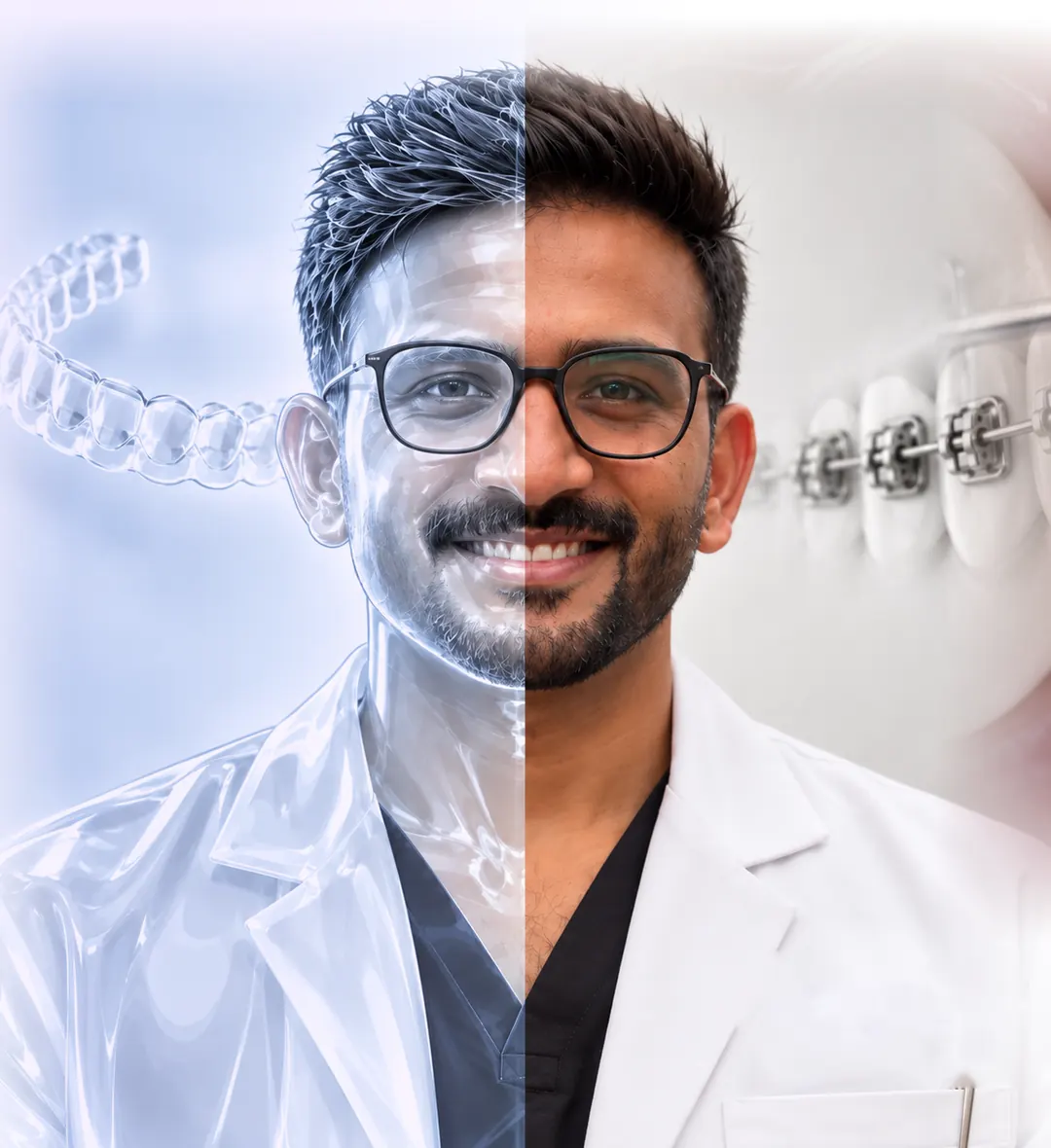
Dr. Rizwin, orthodontist and clear aligner specialist in Thrissur, Kerala, shown in a split portrait: one half as a transparent clear aligner, the other in a white coat beside metal braces
Trusted by10,000+ patients

MDS Orthodontics, Yenepoya University, Mangalore

I’m Dr. Rizwin.Orthodontist. Clear aligner specialist.

An orthodontist from Thrissur, Kerala. I’ve specialised in clear aligners, run my own in-house aligner unit, and I’m a certified Invisalign, ClearCorrect and Spark provider and aligner educator.

From crowding and spacing to the most complex bites, I treat every kind of malocclusion, giving you teeth that meet the way nature intended and the confidence to smile without a second thought.

  • Orthodontist
  • Aligner specialist
  • In-house aligner unit
  • Certified Invisalign, ClearCorrect & Spark provider
  • Aligner educator

Wherever you are in the world, you can book your consultation here, in Thrissur or online. @thealignerproject

Dr. RizwinSpecialist Orthodontist
and Dentofacial Orthopedician

I don’t just align teeth. I give back every smile you’ve been holding back.

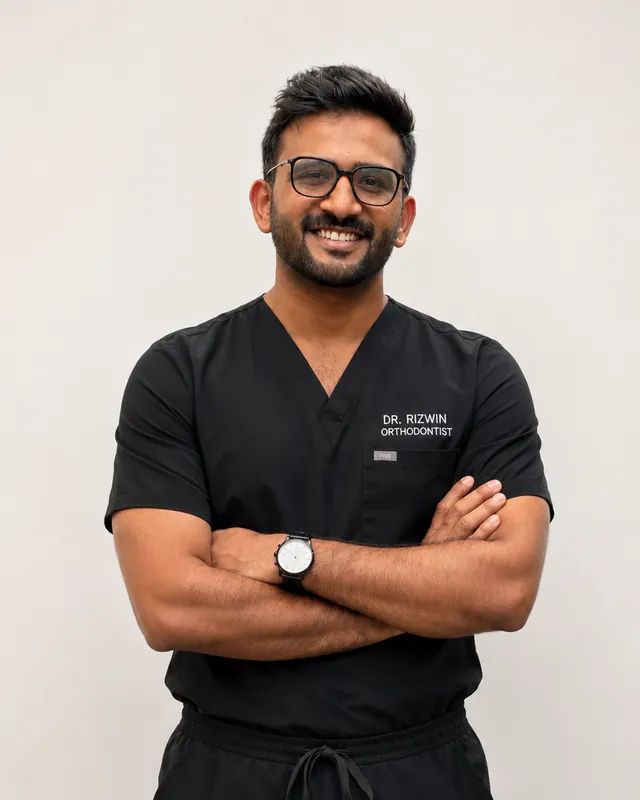
Dr. Rizwin, orthodontist and clear aligner specialist in Thrissur, Kerala, smiling in black scrubs embroidered Dr. Rizwin Orthodontist
“An aligner is only as good as the orthodontist who plans it. That’s why I plan every case myself.”
Dr. Rizwin

About me

I’m Dr. Rizwin. I’m an orthodontist, and aligners are my specialty.

I’m an orthodontist from Thrissur, Kerala. I completed my MDS in Orthodontics & Dentofacial Orthopaedics at Yenepoya University, Mangalore, where my thesis studied different clear aligner materials. My research has won Best Paper awards at national orthodontic conferences.

I have advanced training in clear aligner therapy and myofunctional appliances. I treat all malocclusions, from crowding, spacing and open bites to the most complex cases, choosing fixed braces, lingual braces, expanders, functional or myofunctional appliances, or clear aligners according to what each case truly needs. Whatever your malocclusion, my goal never changes: a bite that works as beautifully as it looks, and a smile you’ll never want to hide.

Over the years, clear aligners became the work I love most. As a certified Invisalign, ClearCorrect and Spark provider, I could let software decide how your teeth should move, but software has never seen someone cover their mouth when they laugh. I have. That’s why I plan every case myself.

I run my own in-house aligner unit, so the aligners I prescribe are designed, printed, formed and checked under my supervision, from scan to final tray. I’m also an aligner educator: through The Aligner Project, I share what I’ve learned about clear aligners with fellow dentists. And I consult patients online, across India and abroad.

  • EducationMDS, Orthodontics & Dentofacial OrthopaedicsYenepoya University, Mangalore, Thesis on clear aligner materials
  • Advanced trainingClear aligner therapyMyofunctional appliances
  • Certified aligner providerInvisalign · ClearCorrect · SparkCertified provider of three leading aligner systems
  • In-house aligner unitDesigned, printed & finished in-houseEvery aligner checked under my supervision
  • Aligner educatorFounder, The Aligner ProjectEducation for fellow dentists
  • AwardsBest Paper PresentationNational orthodontic conferences
Diagnosis before appliance

Braces, aligners or functional therapy: the bite decides, not the trend.

Every plan made by hand

No automated setups. Every tooth movement is decided by a specialist.

Honest, always

A written plan, a clear fee, and a straight answer if treatment isn’t right for you.

My story in six chapters

My journey, one tooth at a time.

Keep scrolling. With every chapter, one more tooth falls into line.

Chapter 1: The spark

I fell in love with a look in people’s eyes.

Long before aligners or labs, there was a moment I kept seeing: the day a patient’s treatment was finished and they looked in the mirror for the first time. Their smile changed, but what really changed was their eyes. There was a spark of confidence that hadn’t been there before.

That spark is why I chose orthodontics. Straight teeth are the result; a person who smiles without thinking twice is the reason.

A smile you can see. Confidence you can see in their eyes.

Chapter 2: The training

Learning why teeth move.

I did my MDS in Orthodontics & Dentofacial Orthopaedics at Yenepoya University, Mangalore. I wanted to understand the science behind every movement, not just the appliances, and my research went on to win Best Paper awards at national orthodontic conferences.

Even then, aligners had caught my attention. My thesis compared different clear aligner materials: how they behave, how they hold their force, and what makes one better than another. Without knowing it yet, I was laying the first brick of my own aligner unit.

Chapter 3: Every kind of bite

Braces, lingual, functional, and lessons from all of them.

With advanced training in myofunctional appliances, I treated every kind of case: fixed braces, lingual braces hidden behind the teeth, expanders, and functional and myofunctional appliances for growing children. It taught me the most important rule in orthodontics: the diagnosis matters more than the appliance.

Chapter 4: The turning point

Then aligners changed how I plan.

Clear aligners let me design every tooth’s movement in 3D before treatment even begins, and patients loved how discreet they were. I specialised in them and became a certified Invisalign, ClearCorrect and Spark provider.

But one thing kept bothering me. The plan was mine, yet the aligners came from an outside lab. Between my plan and my patient’s smile was a step I didn’t control.

Chapter 5: My own unit

So I built my own aligner unit.

So instead of relying on lab-made aligners, I decided to make them myself. I set up my own in-house aligner unit, so I’m in complete control of every step and can deliver the best aligners I possibly can.

Today every aligner I prescribe is designed, printed, formed and checked under my supervision, from the first scan to the final tray. If something needs adjusting, I don’t wait on anyone; it’s fixed down the corridor.

Chapter 6: Passing it on

Now I share what I’ve learned.

As an aligner educator, I help fellow dentists understand clear aligners better through The Aligner Project. And every week, I meet new patients online from across India and abroad.

Years later, with every tool from braces to my own aligner unit, every case still ends the same way: with that spark in someone’s eyes.

The next spark could be yours.

Treatments

Every smile has its own path. I’ll find the right one for yours.

Aligners are my specialty, but your treatment is chosen for one reason only: it’s what your smile truly needs.

My specialty

Clear aligners

Nearly invisible, removable trays that move teeth step by step, for crowding, spacing, forward teeth, many bite problems and relapse after braces. Every plan is designed by me and made in my own lab.

  • Planned personally, never automated
  • Made in my in-house lab
  • 3D preview before you start
  • Monitored online
Read more about clear aligners
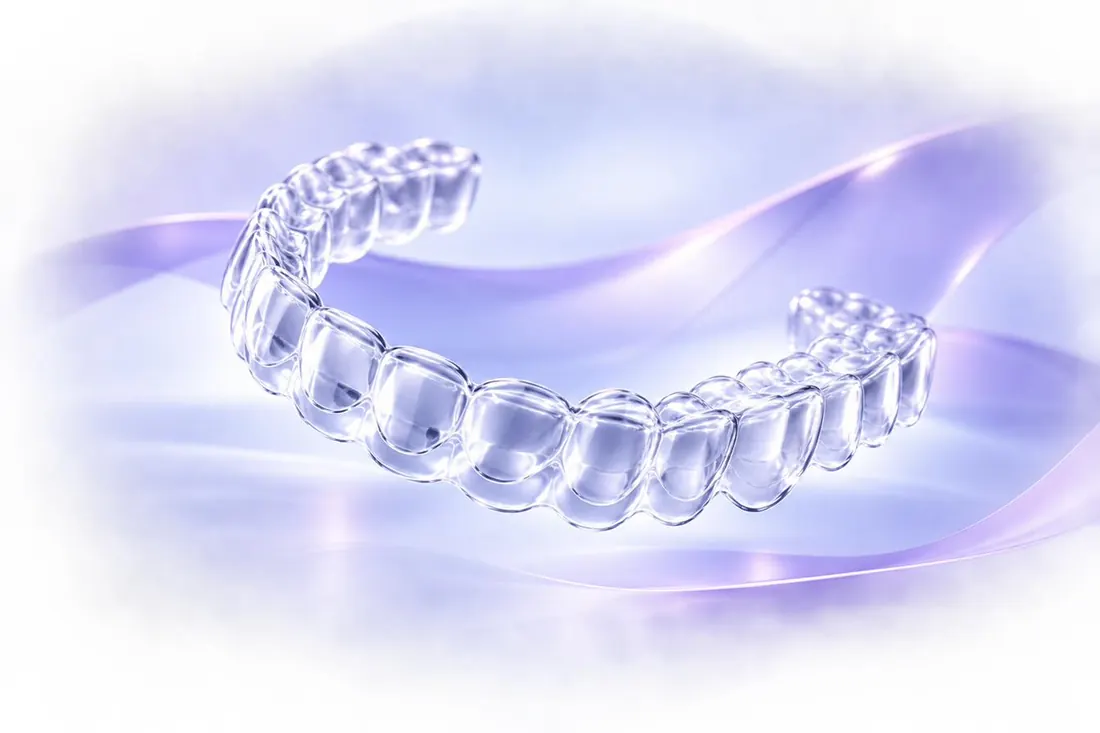
Clear aligner trays from Dr. Rizwin's in-house aligner unit in Thrissur

See aligners at work

Most people come to me with one of these.

Pick yours, then drag to see how aligners correct it.

Your smile, front and side viewBefore

Front view, like looking in your mirror
Side view of the front teeth
BeforeAfter

Illustration only. Every mouth is different.

Crowding

Not enough room, so teeth overlap, twist and sit out of line.

What it is
The teeth are slightly too big for the space in the jaw, so they overlap, rotate or get pushed in or out of the arch.
Why it matters
Overlapping teeth trap plaque and are harder to clean, which raises the risk of decay and gum problems. They can also wear unevenly.
How I fix it
First I create room, by gently widening the arch, uprighting teeth or polishing tiny amounts between them (IPR). Then each tooth is untwisted and lined up, a fraction of a millimetre per aligner.
Typical time
Usually 6–18 months, depending on severity

Spacing / gaps

Gaps between teeth, often most noticeable in the front.

What it is
There is more space than tooth. It can come from small or missing teeth, tongue habits, jaw size, or gum changes over time.
Why it matters
Food gets trapped, gums can get irritated, and some gaps slowly widen. Many people simply don’t like how it looks when they smile.
How I fix it
Aligners move the teeth together in a planned sequence and close the gaps. If a tongue habit caused the spacing, myofunctional therapy helps keep them closed.
Typical time
Often 4–12 months

Open bite

Your front teeth don’t meet when you bite down.

What it is
When your back teeth are closed, a gap remains between the upper and lower front teeth. It’s often linked to tongue thrust, thumb-sucking, mouth breathing, or the way the jaws have grown.
Why it matters
Biting into food with your front teeth becomes difficult, some sounds can be hard to say, and the back teeth take extra load.
How I fix it
Aligners can close many open bites by bringing the front teeth into contact while controlling the back teeth. If a habit caused it, myofunctional therapy treats the cause so it doesn’t come back. Some jaw-related cases need braces or combined treatment.
Typical time
Often 10–18 months

Deep bite

Your upper front teeth cover too much of your lower teeth.

What it is
When you bite, the upper front teeth overlap the lower ones too deeply, sometimes hiding them completely. In severe cases, the lower teeth bite into the gum behind the upper teeth.
Why it matters
It can wear down the front teeth, damage the gums, strain the jaw joints, and make the lower face look shorter.
How I fix it
Aligners can open a deep bite by levelling the teeth, using small bite ramps and careful staging. In growing children, functional appliances can help the lower jaw come forward.
Typical time
Often 12–20 months

Forward teeth

Upper front teeth that flare out or stick forward.

What it is
The front teeth are tipped forward, often with gaps. It can come from thumb-sucking, the way the jaws meet, or crowding pushing teeth out.
Why it matters
Lips may not close comfortably, the teeth are more exposed to injury, and the smile can look “toothy.”
How I fix it
Aligners tip the front teeth back into the arch, usually after making space. If the jaws are involved, braces or a functional appliance may work better, and I’ll tell you honestly.
Typical time
Often 8–18 months

How teeth move

Watch spaces close, millimetre by millimetre.

Whatever the appliance, orthodontics works by applying gentle, controlled force so teeth move through the bone that supports them. This render shows spaced front teeth closing to a planned result.

Illustrative rendering, not a patient. Real timelines and results vary from person to person.

Why each treatment differs
Clinical render · illustrative
Space remaining0.0 mm

30-second self-check

Am I a good candidate for aligners?

Five honest questions, the same ones I’d ask you in my clinic. You’ll get a first answer, plus a reply to your biggest worry.

0 of 5 answered

1 What concerns you most about your smile?
2 How old are you (or the patient)?
3 What’s your biggest worry about treatment?
4 How are your gums and teeth right now?
5 Could you wear aligners for about 22 hours a day?

Frequently asked questions

Your aligner questions, answered by a specialist.

The questions patients search for most, answered honestly. Pick a topic.

Am I a good candidate for clear aligners?

Most teens and adults with crowding, gaps, forward teeth, mild-to-moderate bite problems or teeth that moved after braces are good candidates. What matters most is healthy gums and teeth, and being willing to wear aligners 20–22 hours a day.

How can I check myself before booking?

You’re likely a good candidate if:

  • You’re 12 or older and all your adult teeth have come in
  • Your concern is crowding, spacing, forward teeth or relapse
  • Your gums don’t bleed and your teeth aren’t loose
  • You can commit to 20–22 hours of wear a day

It needs a closer look if:

  • Your upper and lower jaws are very mismatched in size or position
  • Several teeth are missing, or you’re planning implants or crowns soon
  • You have active gum disease or untreated cavities

The self-check above gives you a first answer.

Am I too old for aligners?

There’s no upper age limit. Teeth move at any age as long as the gums and bone around them are healthy. Many of my patients are in their 30s, 40s and 50s.

Can aligners fix my bite, or only make teeth look straight?

Aligners can correct many deep bites, open bites and crossbites, using small attachments, elastics and careful planning. When the problem is in the jaw bones themselves, a functional appliance (for children), fixed braces or combined treatment may work better. I’ll tell you which applies to you.

I had braces before and my teeth moved. Can aligners fix that?

Yes, and this is one of the most common reasons adults come to me. Relapse cases are often short treatments, followed by a good retainer plan so it doesn’t happen again.

Still unsure? Not sure if aligners suit you? I’ll tell you honestly in one call. A 30-minute video consult with me: honest answers about your teeth.

See how online consults work
How do clear aligners move teeth?

Each aligner is made slightly different from your current tooth position. It applies gentle, constant pressure, and the bone around the tooth slowly remodels to let it move. Every new aligner moves teeth roughly a quarter of a millimetre further along a plan I design in 3D.

What are attachments and IPR?

Attachments are tiny tooth-coloured bumps bonded to some teeth. They give the aligner something to grip, for more precise movements. IPR means polishing a fraction of a millimetre between some teeth to create space. Both are quick and comfortable, and they’re used only when your plan needs them.

How long does treatment take?

Mild cases often take 4–8 months, moderate cases 8–14 months, and complex cases 12–24 months. Wearing your aligners consistently is the biggest factor in finishing on time.

How often do I change aligners and see the doctor?

You usually switch to a new aligner every 7–14 days. You’ll visit the clinic a few times, for the scan, attachments and finishing. Most check-ins happen online, with photos and video calls.

Can treatment be done online?

The consultation, planning and most follow-ups, yes. The 3D scan and placing attachments need a clinic visit, at my clinic or a partner clinic. Your aligners are made in my lab and sent to you.

I live outside India. Can I still consult with you?

Yes. Wherever you are in the world, you can book an online consultation here. We’ll schedule the call in your time zone. If you’re planning to visit India, we can do the consultation and planning before you travel, and arrange your scan and aligner fitting during your visit.

Still unsure? Want to see your own teeth move in 3D before you decide? A 30-minute video consult with me: honest answers about your teeth.

See how online consults work
Are aligners painful?

Most people feel pressure or tightness for 1–2 days after switching to a new aligner, which is a sign it’s working. It’s usually much milder than braces, with no wires or brackets rubbing your cheeks. If needed, a simple painkiller helps on the first day.

Will I speak differently?

Some people have a slight lisp for the first few days. Your tongue adapts quickly, and most people sound completely normal within a week.

Can people see them?

Aligners are clear and thin, so most people won’t notice unless they look closely. Attachments are tooth-coloured. If you need something completely hidden, lingual braces sit behind the teeth.

Do aligners cause bad breath or sore gums?

Not if you keep them clean. Brush your teeth before putting aligners back in, rinse the aligners whenever you remove them, and clean them gently every day.

Still unsure? Worried about comfort? Ask me anything on a short video call. A 30-minute video consult with me: honest answers about your teeth.

See how online consults work
Can I eat with aligners?

You take them out to eat, so there are no food restrictions. Eat what you like, then brush or at least rinse before putting them back in.

What can I drink with them in?

Plain water only. Tea, coffee and other hot drinks can warp or stain aligners, and sugary or acidic drinks get trapped against your teeth. Remove them for anything other than water.

How many hours a day do I need to wear them?

20–22 hours a day, including while you sleep. Aligners only move teeth while they’re in your mouth, so fewer hours means teeth fall behind the plan.

What if I lose or break an aligner?

Tell me right away. Usually you move to your next aligner or go back to the previous one while my lab makes a replacement quickly.

Can I wear them for weddings, travel or sports?

Yes. You can take them out briefly for a big event, and we can plan around important dates. For contact sports, a mouthguard may be advised.

Still unsure? Have a lifestyle question? Let’s plan treatment around your life. A 30-minute video consult with me: honest answers about your teeth.

See how online consults work
How much do clear aligners cost?

It depends on how complex your case is and how many aligners you need. You get a written, all-inclusive fee after your 3D plan.

Why are some aligners so much cheaper?

Lower-cost mail-order aligners often skip an in-person examination, X-rays and close doctor supervision. That can work for very mild cases, but corrections for treatment that goes wrong can cost more later.

What’s included in the fee?

All your aligners, your 3D smile preview, attachments and IPR, refinements if needed, and your retainers.

Are aligners worth it compared with braces?

Both work well when they’re planned properly. Aligners cost about the same or a little more, and they’re nearly invisible and removable. Braces suit some complex cases better. I offer both, so I’ll recommend whichever gives you the better result.

Still unsure? Want your exact fee? You’ll get it in writing after your plan. A 30-minute video consult with me: honest answers about your teeth.

See how online consults work
Will my results last?

Yes, with retainers. Teeth tend to drift back toward where they were, so every plan with me includes a retention phase.

Do I need to wear retainers forever?

Usually full-time for a short period, then at night only, long-term. A few nights a week of retainer wear is a small price for a lifetime of straight teeth.

What if my teeth don’t move as planned?

Sometimes a tooth lags behind, often because wear time slipped. I check your fit regularly, and if needed my lab makes a few extra refinement aligners to finish the job.

Are aligners safe for my teeth?

When they’re planned and supervised by an orthodontist, yes. The main risks come from poor hygiene (cavities under the aligners) or teeth moved too fast without supervision. Both are avoidable.

Still unsure? Want to know what results to expect for your smile? A 30-minute video consult with me: honest answers about your teeth.

See how online consults work

Confused by the options?

Specialist aligners vs braces vs mail-order kits.

They’re not the same thing. Here’s the honest difference.

Clear aligners with Dr. Rizwin compared with braces and mail-order aligners
Aligners with Dr. RizwinBracesMail-order / DIY aligners
Who plans itA specialist orthodontist, personallyOrthodontist or dentistOften a remote technician; doctor review varies
Examination firstYes: scan, X-rays, gums and biteYesOften none, or photos only
VisibilityNearly invisibleVisible (lingual braces are hidden)Nearly invisible
Eat & brush normallyYes, they’re removableFood limits, harder to cleanYes
Complex bitesMany, with attachments and elasticsYes, the most versatileMild cases only
If teeth don’t trackCaught early; fast refinements from my labAdjusted at visitsLimited follow-up
Typical costWritten fee after your 3D planWritten fee after your examinationLower upfront; corrections can cost more

More detail: braces vs clear aligners.

Cost and time, upfront

No hidden fees. No guessing.

Your exact fee comes in writing after your 3D plan. These ranges help you plan ahead.

Mild

Fee in writing

Small gaps, slight crowding, minor relapse after braces

4–8 months

Moderate, most common

Fee in writing

Noticeable crowding or spacing, forward teeth, mild bite issues

8–14 months

Complex

Fee in writing

Severe crowding, deep or open bites, combined treatment

12–24 months

Always included

  • All your aligners, made in my unit
  • Your 3D smile preview
  • Attachments and IPR
  • Refinements, if needed
  • Retainers
  • A written fee before you start
Clear aligner cost in Thrissur, explained

Life with aligners

Your life doesn’t pause. Your smile just quietly gets better.

No food lists, no missed celebrations. Aligners come out whenever you eat or drink, so you enjoy everything you love, exactly as before.

  1. Breakfast

    Puttu, appam, a hot cup of chai

    Pop your aligners out, enjoy breakfast, brush, and slip them back in. Two minutes, done.

  2. Work or college

    Meetings, calls, presentations

    They’re clear, so most people won’t even know. Any slight lisp fades within days.

  3. Lunch out

    Biryani with friends? Go ahead.

    Aligners go into their case while you eat. Rinse, and they’re back in.

  4. Gym or sports

    Train as usual

    Run, lift, play. For contact sports, I’ll advise a mouthguard.

  5. Celebrations

    Weddings, parties, family dinners

    Take them out for the feast and smile freely in every photo.

  6. Sleep

    Your aligners keep working

    Some of their best work happens quietly while you rest.

It really is this simple

Just three habits.

  1. 1

    Wear them 20–22 hours a day

    The more you wear them, the faster your smile moves.

  2. 2

    Take them out to eat and drink

    Eat and drink anything you like. Plain water is fine with them in.

  3. 3

    Brush before they go back in

    Or at least rinse when you’re out. Fresh teeth, fresh aligners.

“Can I still…?” Yes.

  • Eat my favourite food
  • Have my tea and coffee
  • Attend weddings and parties
  • Smile in photos
  • Travel abroad
  • Play sports and go to the gym
  • Give presentations and talks

Online consultation

See a specialist from wherever you are.

For patients across India and abroad, and for second opinions on treatment started elsewhere.

  1. 1

    Online, video call

    Video consultation

    Send your details and smile photos. A dedicated video call is arranged at a time that suits you, and I address your concerns personally.

  2. 2

    Partner clinic

    Diagnostic records

    If treatment is advised, your diagnostic records (X-rays and a 3D scan) are planned and arranged at a partner clinic near you.

  3. 3

    Online

    3D treatment review

    Your plan is discussed with you properly: a 3D video of how your teeth will move and how your smile will look, how long treatment will take, and exactly what it will cost.

  4. 4

    Your decision

    You approve the plan

    Take your time. Ask questions, request changes, and approve only when you’re happy. The fee is in writing.

  5. 5

    Clinic

    Aligners delivered

    Once you approve, your aligners are made in my in-house unit and delivered to you at a clinic near you, within weeks.

  6. 6

    Online & clinic

    Proper monitoring

    Regular check-ins, online and in person, so every aligner fits and every tooth stays on track, all the way to your final smile.

Consultations worldwide

Wherever you are, you can consult with me here.

Living outside India? Planning a trip home or a visit to India? Book your online consultation from anywhere in the world. Calls are scheduled in your time zone.

  • Living abroad: Consult online and get an honest opinion on your smile, without travelling.
  • Visiting India: Plan before you fly, then do your scan and aligner fitting during your visit.

Consultation fee adjusted against treatment

30 min one-to-one with Dr. Rizwin

Video a dedicated call, at a time that suits you

Start with step 1
The Aligner Project logo

The Aligner Project by Dr. Rizwin

An in-house aligner unit, and aligner education for dentists.

Every aligner I prescribe is designed, printed and finished in my own unit. Through The Aligner Project, I educate fellow dentists about clear aligners: how they work, the materials behind them, and what makes treatment succeed.

  • In-house labScan, plan, print, form, check
  • Aligner educationTalks and sessions for dentists
  • Lab servicesSpecialist-reviewed aligners for clinics

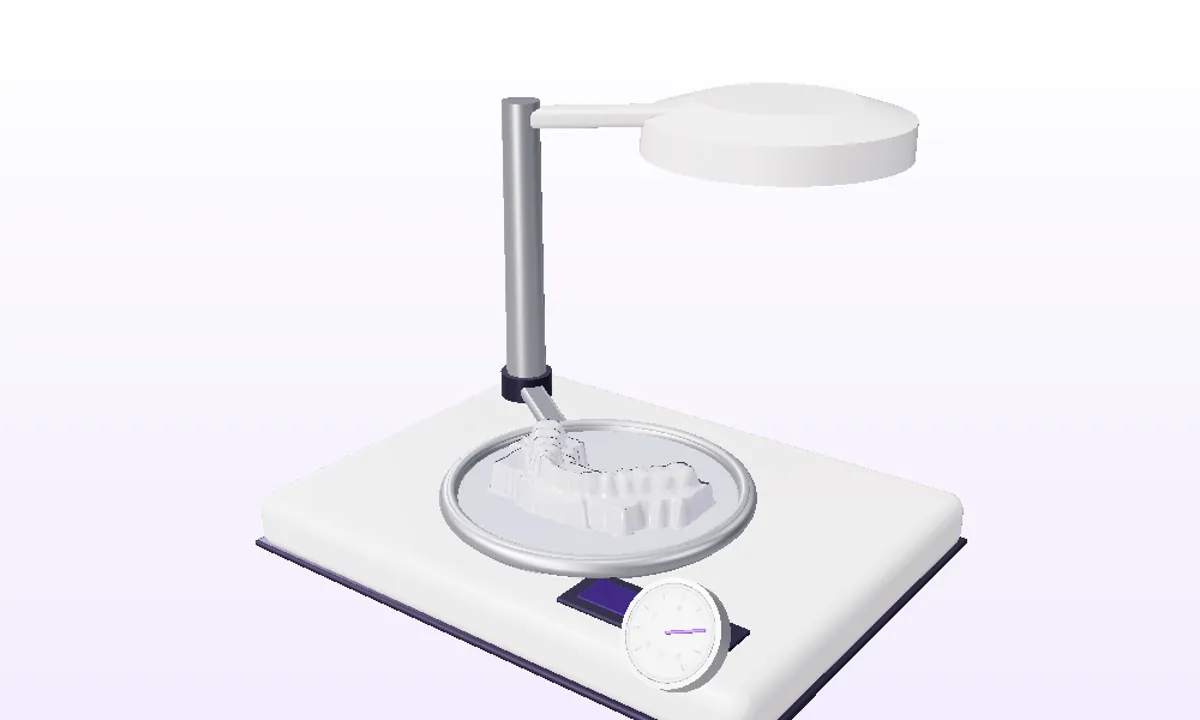
Fig. 1 · Inside my aligner unit

Sheet clamped in the frame

3D render of an aligner pressure former: a heater, a clamp ring holding a clear sheet and a 3D-printed dental model under it
An aligner pressure former in my in-house unit: the heater softens a clear 0.75 mm sheet, the frame lowers it over a 3D-printed model of your teeth, and pressure holds it tight while it cools. Illustration.

Serving patients from

Thrissur and across North Kerala

Ready to plan your smile?

Book a consultation and I will explain which option suits your teeth, bite and lifestyle, and what to expect.

Or email thrissuraligner@gmail.com

Book consultation